
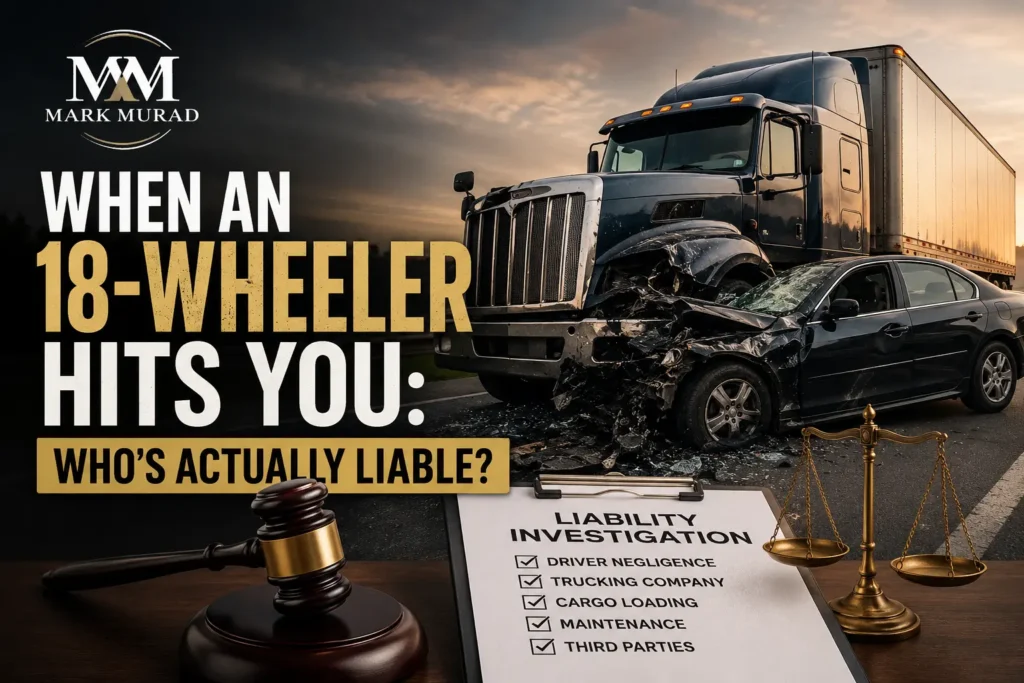
Here’s something nobody warns you about. Car hits car, liability’s usually simple. One driver, one insurer, one claim, done. A commercial truck crash? Not even close. There’s a whole chain of companies that might share the blame here, and figuring out who’s actually on the hook can eat up weeks most people just don’t have while they’re trying to heal. That gap, honestly, is exactly what a truck accident lawyer exists to close.
The Web of Liability Behind Every Big Rig
Start with the obvious one, the driver. But behind that driver? A trucking company, and that company might not even own the truck itself. Trailers get leased out. Cargo often gets loaded by some separate logistics outfit entirely. Maintenance gets outsourced too, sometimes to a shop that never once saw the truck actually roll onto the highway. Any of these players could carry part of the blame. Untangling it means digging through contracts, shipping manifests, maintenance logs, stuff most drivers never even knew existed until now.
Federal Rules Almost Nobody Has Heard Of
Commercial trucking runs on federal regulations regular drivers never brush up against. Hours-of-service limits control how long a driver stays behind the wheel before resting up. Weight restrictions govern cargo loads. Inspection requirements are supposed to catch mechanical problems before they cause a wreck in the first place. When those rules get ignored, it’s rarely just bad luck. More often it’s the actual root cause. And proving that takes someone who already knows which records to go asking for.
Racing the Clock Before Evidence Vanishes
Trucks carry event data recorders, basically black boxes, and companies aren’t obligated to hold that data forever. Dash cam footage gets overwritten. Skid marks fade off the asphalt in days, sometimes hours. Getting a formal request out fast, a spoliation letter is the technical term, can mean the difference between real proof and just a police report and a shrug.
Adding Up What’s Actually Been Lost
Serious truck wrecks rarely stop at a quick urgent care visit. Think surgeries. Extended rehab. Months away from a paycheck. A recovery that might never fully close out. Insurers backing large fleets tend to have deep pockets and defense teams whose entire job is negotiating claims down. A settlement that lands fast, before anyone even knows the full extent of an injury, usually isn’t generous. It’s a strategy, plain and simple.
Why the Law Offices of Mark Murad Take These Cases Seriously
Trucking litigation isn’t something every personal injury firm handles on a regular basis, and that gap shows up in outcomes. The Law Offices of Mark Murad lean heavily into cases where injured clients face off against large commercial carriers, working through federal violations, driver logs, and liability chains a general practice attorney might not even think to chase.
What to Do in the First 48 Hours
See a doctor first, even if nothing feels broken. Adrenaline hides injuries sometimes, for days even. Photograph everything you can manage, the vehicles, the road, any damage that’s visible. Skip giving a recorded statement to any insurer, yours included, before talking to someone who actually understands what’s being asked of you. Bringing in a truck accident lawyer early doesn’t mean assuming the worst. It just means somebody’s watching the clock while you focus on getting better.
Bottom Line
Commercial truck crashes carry more moving parts than almost any other wreck on the road. More companies. More regulations. More at stake. Filing a claim without sorting out liability first is a bit like signing something without reading it, technically doable, but risky in ways that only surface later. Having someone who’s walked this road before, like the team at the Law Offices of Mark Murad, tends to matter a lot more once the insurance company’s lawyers show up. It’s rarely fast. But it’s worth getting right the first time around.